Overview of the Moroccan Cooking Class in Marrakech
Duration:4 hours 0 minutes
Travelers:10 guests
Tour Type:Private
Language:All Languages
Discover Morocco through its flavors with an authentic Moroccan Cooking Class in Marrakech. This hands-on culinary experience introduces you to the ingredients, spices, techniques, and traditions behind some of the country's best-known dishes while giving you the opportunity to prepare Moroccan food yourself.
During the experience, learn how everyday ingredients are transformed into richly flavored Moroccan dishes using traditional cooking methods. Follow the preparation process step by step, discover how Moroccan spices are combined, and participate directly in creating the meal. Once the cooking is complete, sit down and enjoy the dishes you've prepared in a relaxed setting—a delicious way to experience Moroccan culture beyond Marrakech's monuments and souks.
Highlights of the Moroccan Cooking Class in Marrakech
• Learn how to prepare traditional Moroccan dishes during a hands-on cooking experience in Marrakech.
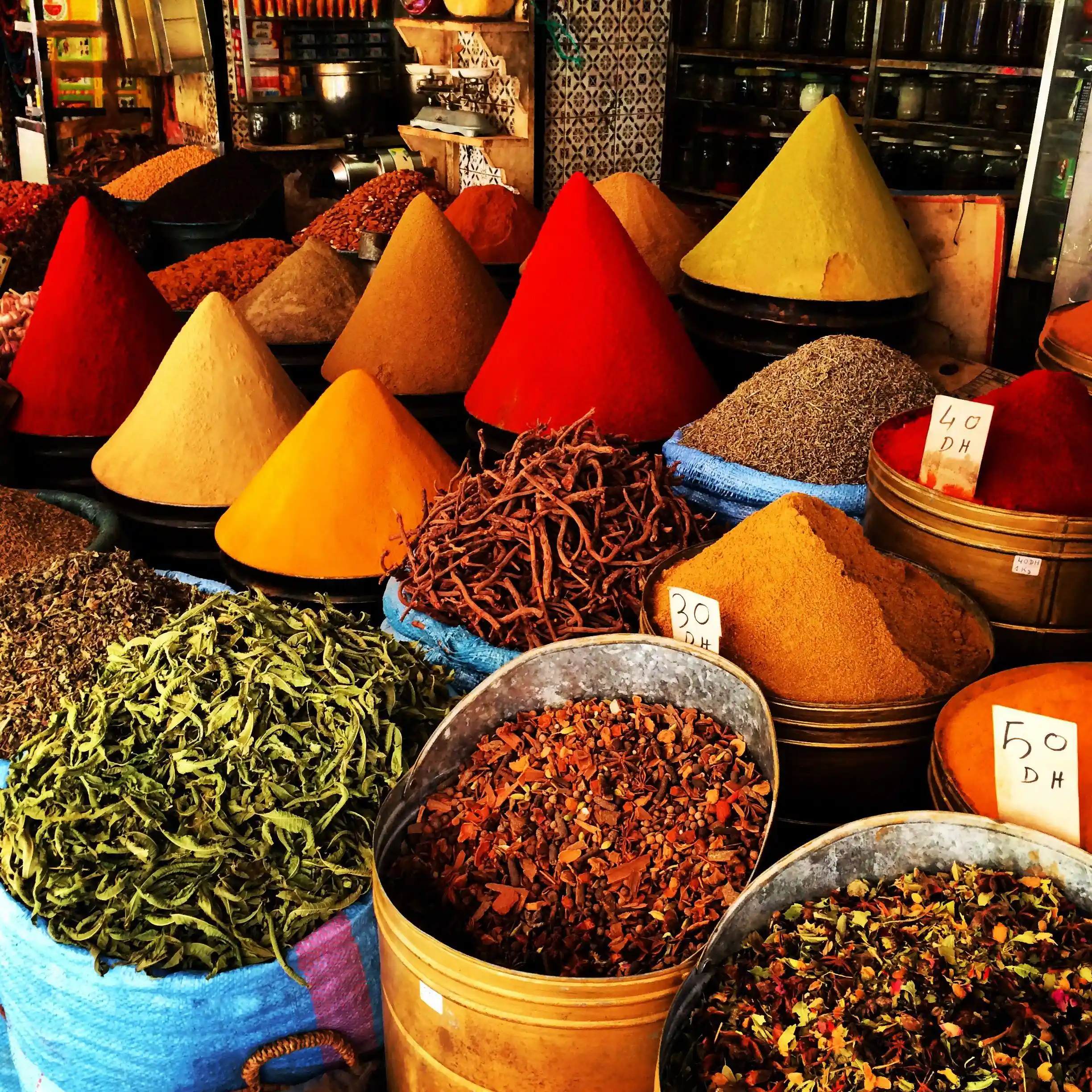
• Discover the spices, herbs, and fresh ingredients commonly used in Moroccan cuisine.
• Learn traditional preparation techniques that have been passed through Moroccan families for generations.
• Participate directly in preparing several components of your Moroccan meal.
• Discover how famous Moroccan spice combinations create the distinctive flavors of local cuisine.
• Learn more about Moroccan food traditions and the cultural importance of sharing meals.
• Enjoy Moroccan mint tea as part of the culinary experience.
• Sit down and enjoy the freshly prepared dishes after completing the cooking session.
What to Expect – Moroccan Cooking Class in Marrakech
1 – Welcome & Introduction to Moroccan Cuisine
Your Moroccan Cooking Class in Marrakech begins with a warm welcome and an introduction to the country's rich culinary traditions.
You'll discover some of the ingredients that form the foundation of Moroccan cooking, including aromatic spices, fresh herbs, vegetables, preserved ingredients, and traditional seasonings.
This introduction helps you understand how different flavors are combined before you begin preparing the meal yourself.
2 – Ingredients & Preparation
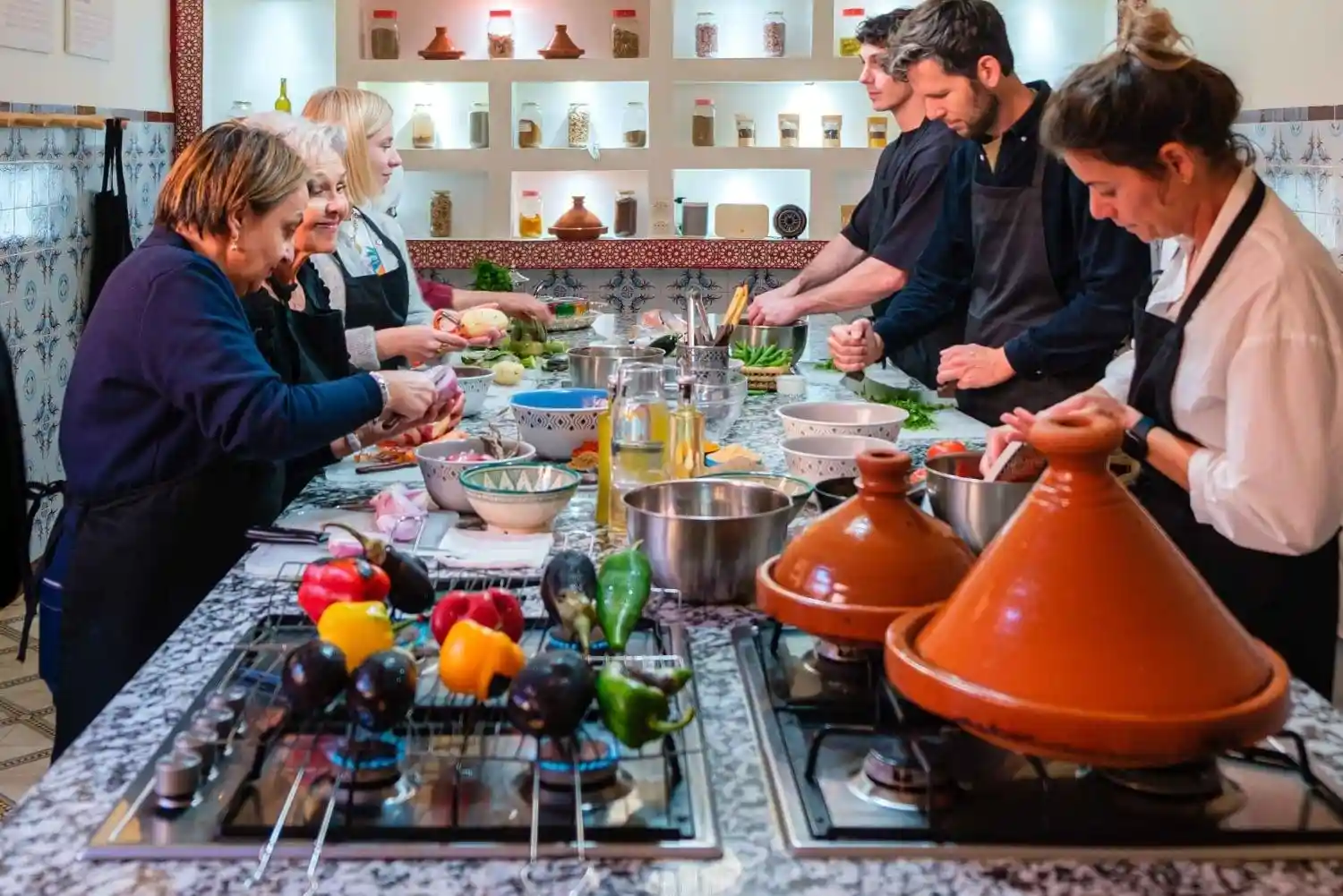
It's time to prepare the ingredients for your Moroccan dishes.
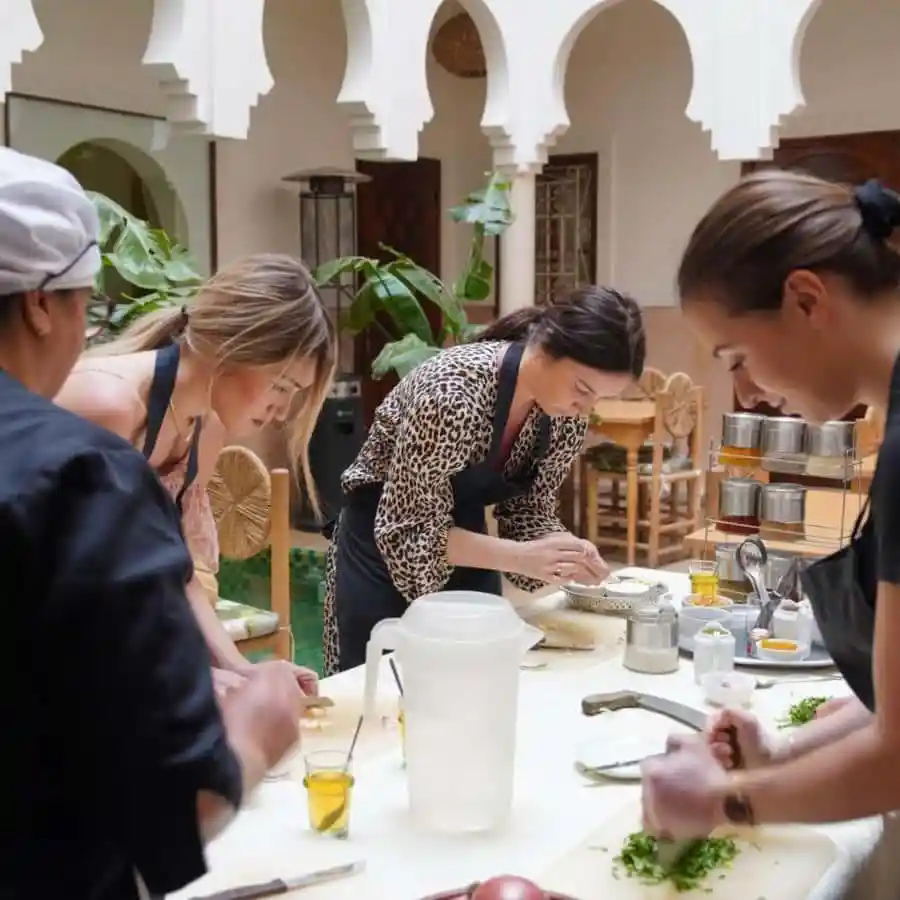
Learn how ingredients are washed, cut, seasoned, and combined while discovering the role that different spices and herbs play in Moroccan cuisine.
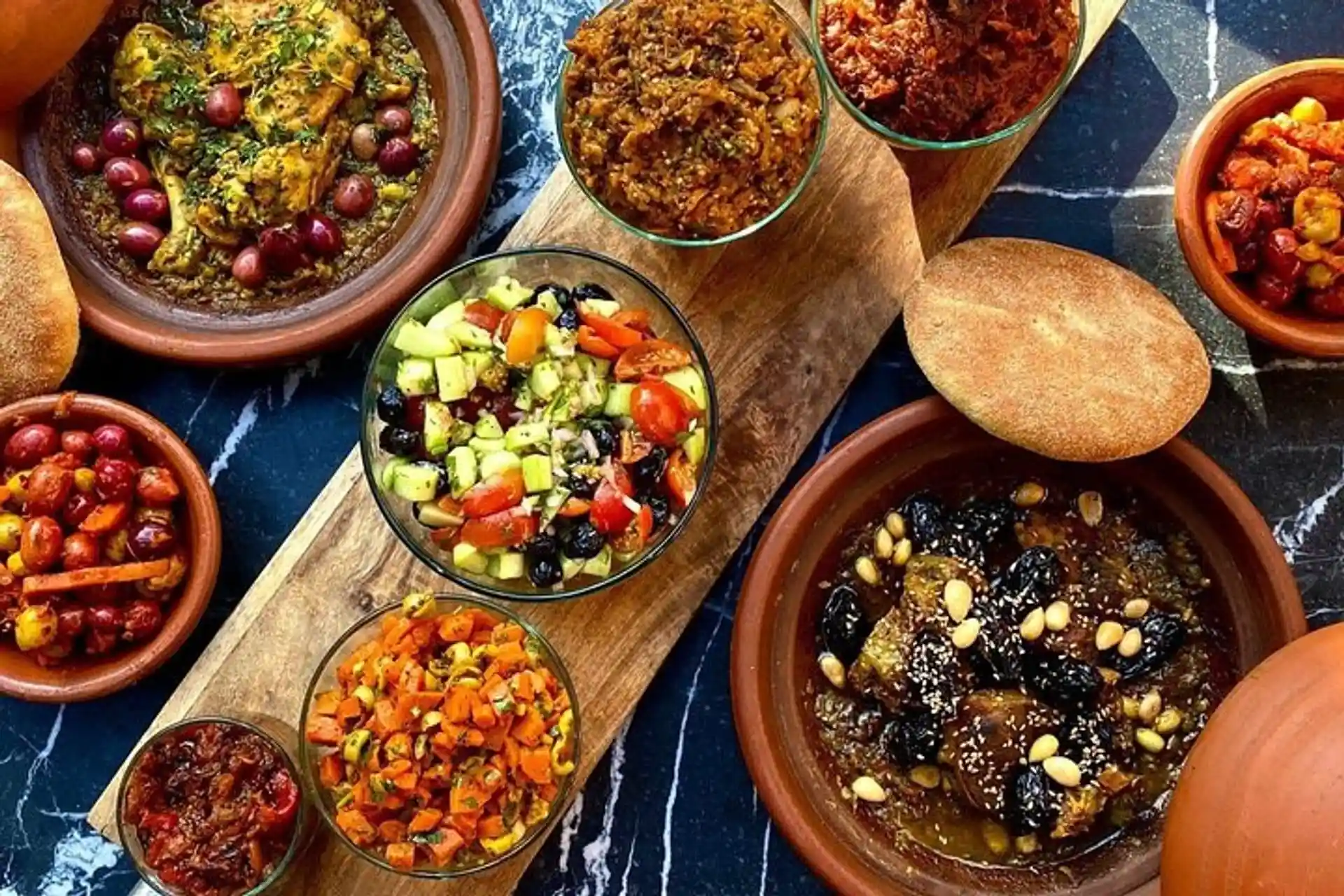
Depending on the menu, preparation may include vegetables, traditional salads, sauces, and ingredients for a tagine or another classic Moroccan dish.
Rather than simply watching, you'll participate directly in the preparation process.
3 – Hands-On Moroccan Cooking
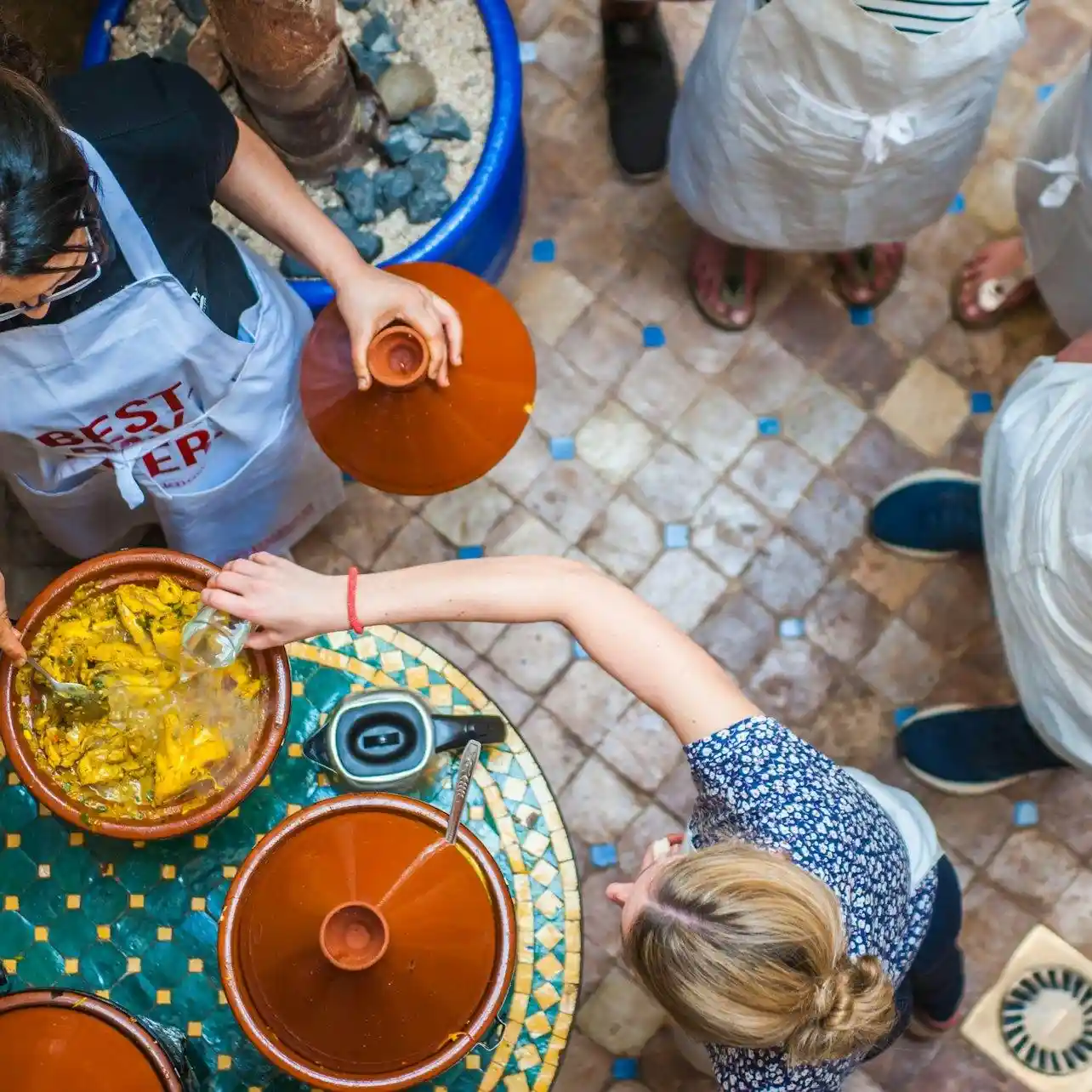
With the ingredients prepared, begin cooking your dishes step by step.
You'll learn traditional techniques and see how careful seasoning and slow cooking help develop the rich flavors associated with Moroccan cuisine.
This is the heart of the experience, giving you the opportunity to cook while learning practical techniques that can be recreated at home.
Along the way, you'll also learn more about Moroccan food culture and the traditions surrounding family meals.
4 – Moroccan Mint Tea
While the food continues cooking, take time to discover another important Moroccan tradition: mint tea.
Learn about the role tea plays in Moroccan hospitality and enjoy a freshly prepared glass while waiting for the meal to finish.
It's also a chance to relax, ask questions, and enjoy the atmosphere before sitting down to eat.
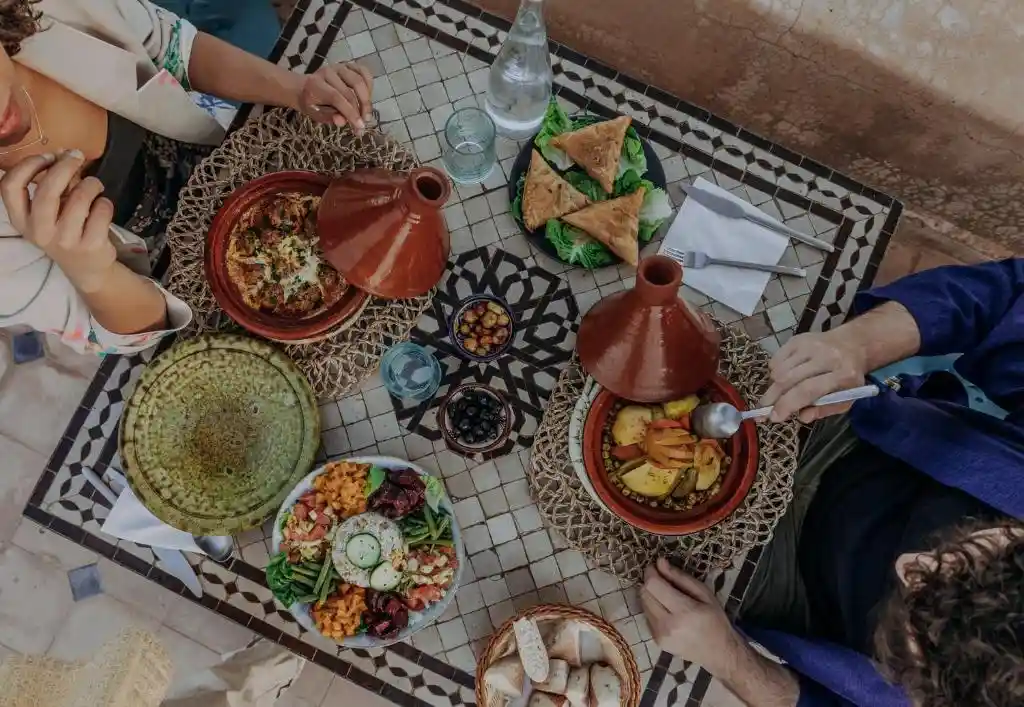
5 – Enjoy Your Homemade Moroccan Meal
Once everything is ready, sit down and enjoy the meal you've helped prepare.
Taste the different dishes together and experience the flavors you've been learning about throughout the class.
Sharing the finished meal is a fitting conclusion to the experience, combining cooking, culture, and Moroccan hospitality around the table.
You'll leave with a greater understanding of Moroccan cuisine—and some inspiration for recreating its flavors at home.
Includes/Excludes in the Moroccan Cooking Class in Marrakech
Cooking ingredients
Hands-on Moroccan cooking class
Cooking equipment and utensils
Preparation of traditional Moroccan dishes
Introduction to Moroccan spices and ingredients
Moroccan mint tea
Meal prepared during the class
Water during the cooking class
Additional drinks
Personal expenses
Tips and gratuities
Travel insurance
Before You Go
Arrive with comfortable clothing suitable for a hands-on cooking experience. The activity involves preparing ingredients and working around food and cooking equipment, so practical clothing is recommended. The exact menu can vary depending on the season, ingredient availability, and the format of the class. Typical Moroccan cooking experiences may feature dishes such as tagine, traditional salads, couscous, breads, or other regional specialties. If you have food allergies, dietary restrictions, or specific dietary requirements, these should be communicated before the activity so the organizer can confirm what can be accommodated.
Let’s Plan Your Adventure To Morocco!
Why booking with EMT?
Trusted local Moroccan guides
Comfortable transport & stays
Flexible & custom itineraries
Dedicated 24/7 customer support
FAQs – Moroccan Cooking Class in Marrakech
1. How long is the Moroccan Cooking Class in Marrakech?
The complete cooking experience generally lasts approximately 3 to 4 hours, including preparation, cooking and time to enjoy the finished meal.
2. What dishes will we prepare during the cooking class?
The exact menu can vary, but the class focuses on traditional Moroccan cuisine and may include dishes such as tagine, Moroccan salads, couscous or other local specialties.
3. Do we get to eat the food we prepare?
Yes. After completing the cooking session, you will sit down and enjoy the Moroccan dishes prepared during the class.
4. Do I need previous cooking experience?
No previous cooking experience is required. The preparation and cooking process is explained step by step throughout the activity.
5. Are ingredients and cooking equipment included?
Yes. The ingredients, cooking equipment and utensils required for the cooking class are included.
6. Can dietary requirements or food allergies be accommodated?
Dietary requirements and food allergies should be communicated before the activity. Available alternatives depend on the menu and should be confirmed in advance.