


8 Days Morocco Women’s Tour
Duration
Group size


Your 10 Days Morocco Photography Tour begins in Casablanca, where your private driver meets you for the journey north.
Before leaving the city, enjoy an opportunity to photograph the impressive exterior and Atlantic setting of the Hassan II Mosque. Continue toward Rabat, where historic architecture and elegant city landscapes provide the first variety of subjects for the journey.
Afterward, travel north through changing countryside toward the Rif Mountains and Chefchaouen.
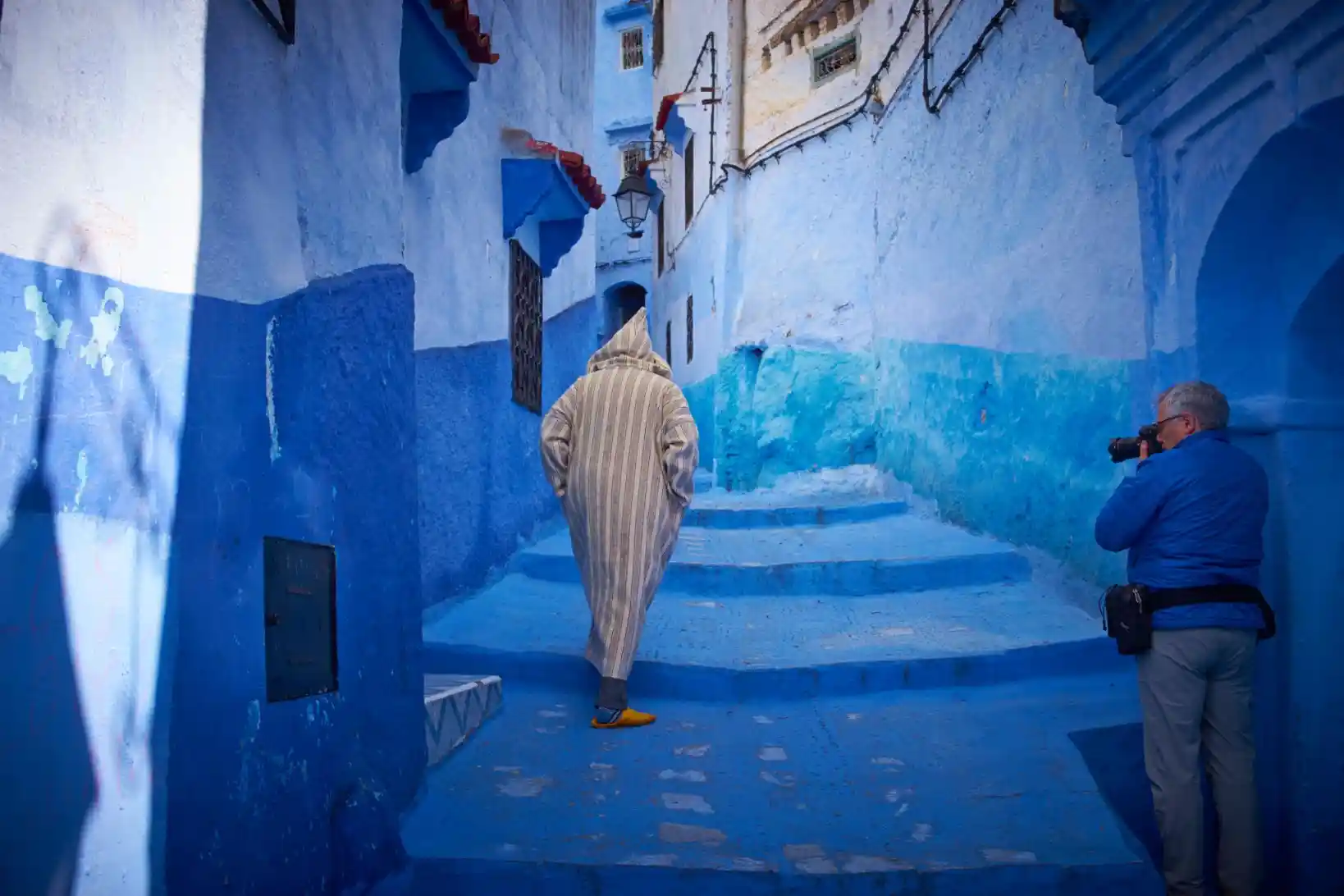
Arrive in the famous Blue City and settle into your riad. Depending on arrival time, head into the medina during the softer evening light for your first photographs of blue walls, colorful doors, stairways and narrow streets.
The evening is free to explore the atmosphere of Chefchaouen at your own pace.
Distance: Approximately 340 km.
Wake early to experience Chefchaouen before its busiest hours.
The quiet morning provides excellent conditions for photographing the medina’s famous blue streets, painted doorways, staircases and architectural details without the larger daytime crowds.
Walk through different neighborhoods and discover compositions created by the contrasting shades of blue, colorful flowerpots and traditional buildings. Continue toward Plaza Uta el-Hammam and the surrounding streets before exploring quieter corners away from the main square.
During the afternoon, enjoy free time to review photographs, relax or continue exploring.
As evening approaches, head toward one of the elevated viewpoints overlooking Chefchaouen. Photograph the blue medina and surrounding Rif Mountains as the light softens before sunset.
Return to the medina for another evening in Chefchaouen.
After breakfast, leave Chefchaouen and travel south through the Rif countryside.
Stop at Volubilis, where ancient Roman ruins provide completely different photographic subjects. Capture stone arches, columns, mosaics and archaeological details against the surrounding countryside.
Continue toward Fes, one of Morocco’s oldest and most visually fascinating imperial cities.
After arriving, settle into your riad before enjoying an introduction to the medina surroundings. Depending on the time and light, photograph traditional gates, historic walls and city views.
The evening provides an opportunity to experience Fes as the narrow streets begin to quiet and artificial lights illuminate entrances, shops and architectural details.
Distance: Approximately 260 km.
Today is dedicated to the visual richness of Fes.
Begin early in Fes el-Bali, when the ancient medina is gradually coming to life. Photograph narrow alleys, traditional architecture, market scenes, workshops and the details that reveal centuries of craftsmanship.
Continue through artisan quarters where metalwork, leather goods, ceramics and textiles provide opportunities for detailed and documentary-style photography.
Visit viewpoints overlooking the famous tanneries, where the geometric arrangement of dyeing vats creates one of the city’s most recognizable scenes.
Throughout the day, take time to observe rather than rush between landmarks. The medina rewards photographers who notice small details: carved doors, patterns, light entering narrow passages and everyday moments.
Later, enjoy panoramic views over the rooftops and historic skyline of Fes.
Leave Fes and begin the long but spectacular journey toward the Sahara.
Travel through Ifrane and continue across the Middle Atlas Mountains, where cedar forests, mountain roads and elevated viewpoints provide landscape photography opportunities.
As the route continues south, the scenery gradually becomes drier and more dramatic. Stop at panoramic viewpoints overlooking the Ziz Valley, where palm groves cut through the surrounding arid terrain.
Continue toward Merzouga as the enormous dunes of Erg Chebbi begin to appear on the horizon.
Arrive near the Sahara in the late afternoon. Depending on timing and conditions, photograph the dunes as the lowering sun creates shadows across their ridges.
Spend the night near Erg Chebbi.
Today offers some of the strongest landscape photography opportunities of the entire journey.
Begin around Erg Chebbi, photographing the constantly changing shapes, lines and shadows of the dunes. The contrast between golden sand, blue sky and distant desert landscapes creates countless compositions.
During the day, explore different perspectives around the desert before preparing for the afternoon camel trek.
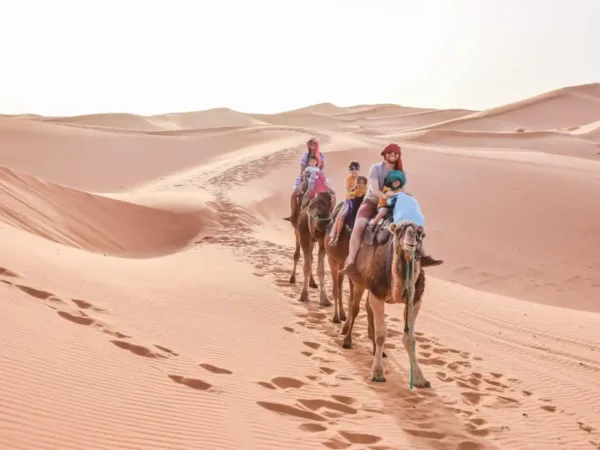
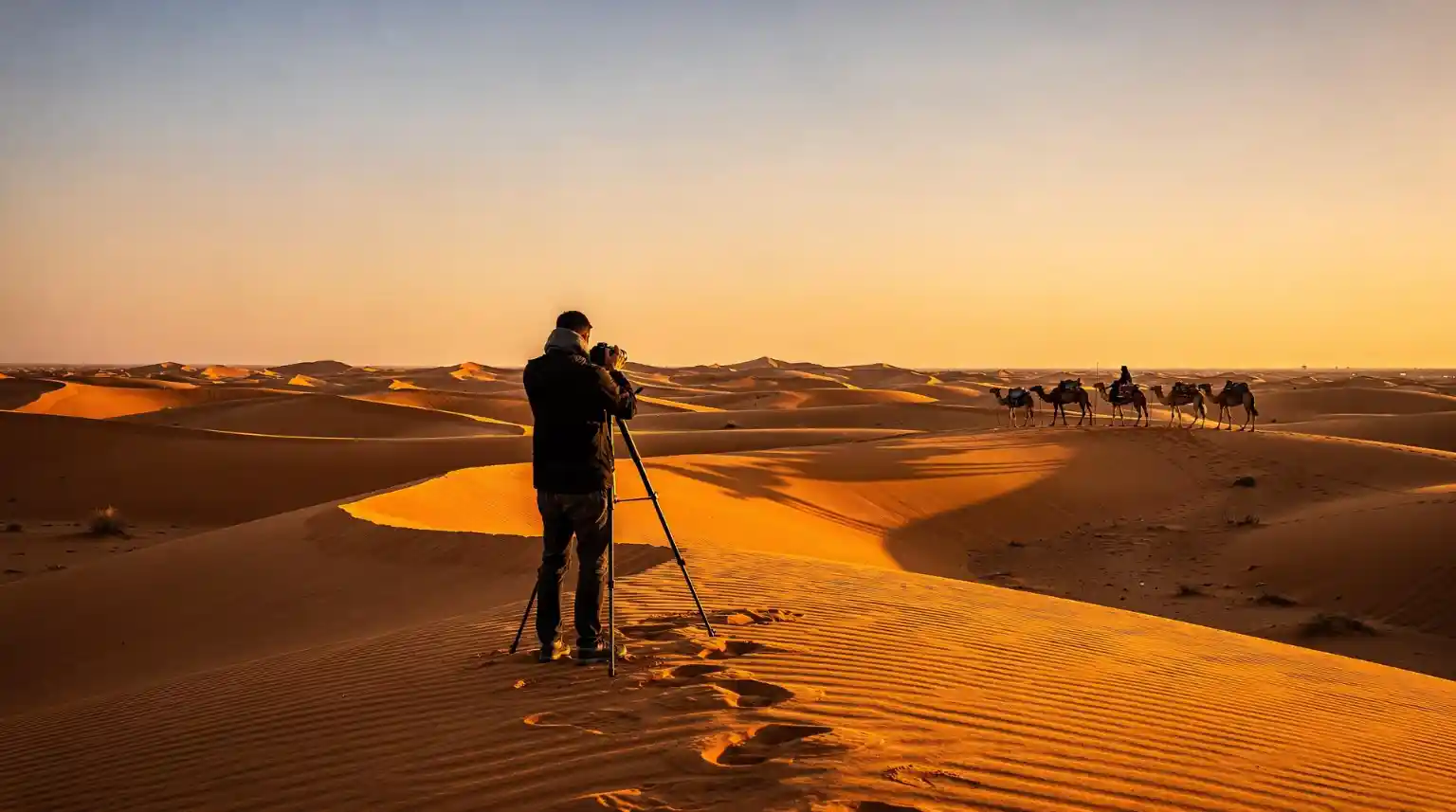
Ride into the dunes as the sun begins to lower. Stop at a suitable location to photograph the desert during golden hour and capture camel silhouettes against the enormous Sahara landscape.
Continue to the desert camp after sunset.
After dinner, clear conditions may provide opportunities for photographing the night sky and stars away from city lights.
Spend the night at the desert camp.
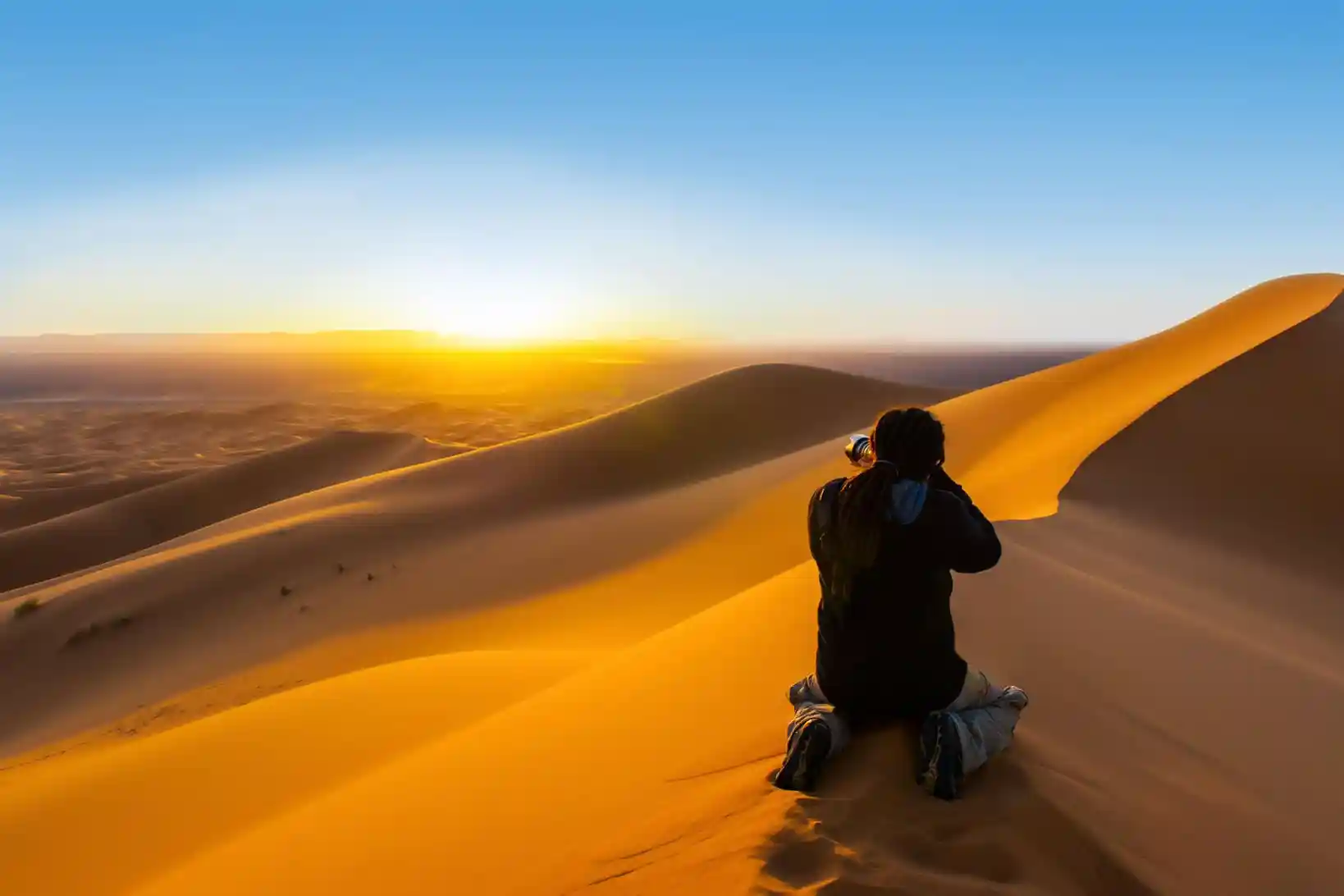
Wake early for sunrise over the Sahara.
Photograph the first light reaching the dunes before breakfast and departure from Merzouga.
Travel west toward Tinghir and Todra Gorge. The towering rock walls provide opportunities for wide landscapes as well as photographs emphasizing scale, texture and natural patterns.
Continue toward the Dades Valley, where the scenery changes again. Photograph traditional kasbahs, winding roads, colorful rock formations and viewpoints overlooking the valley.
The area's dramatic landscapes are particularly attractive as afternoon light creates stronger textures and shadows across the mountains.
Spend the night in the Dades Valley with time to photograph the surroundings before sunset.
Distance: Approximately 270 km.
After breakfast, continue through southern Morocco toward Ouarzazate.
Travel through the Valley of Roses and landscapes dotted with traditional villages and kasbahs. Stops along the route provide opportunities for photographing architecture within the wider natural environment.
Continue toward Ait Ben Haddou, Morocco’s famous UNESCO-listed fortified village.
The afternoon is deliberately kept less rushed so you can explore the ksar and search for different compositions among its earthen towers, narrow passages and surrounding landscape.
As the sun lowers, photograph Ait Ben Haddou in the warmer late-afternoon light, when its earth-colored architecture becomes especially striking.
Spend the night in the area.
Distance: Approximately 145 km.
Begin the morning with another opportunity to photograph Ait Ben Haddou before leaving for Marrakech.
Travel into the High Atlas Mountains, stopping at selected viewpoints where winding roads, mountain villages and enormous valleys create dramatic landscape compositions.
The route climbs through rugged terrain before eventually descending toward the plains surrounding Marrakech.
Arrive in the Red City and settle into your accommodation.
Later, head toward the medina and Jemaa el-Fnaa as the city transitions into evening. The square, surrounding rooftops, food stalls and changing light provide a completely different photographic environment from the natural landscapes experienced earlier in the tour.
Distance: Approximately 185 km.
The final day is dedicated to photographing Marrakech.
Begin early when sections of the medina are quieter and the morning light reaches its narrow streets. Explore colorful souks filled with textiles, lanterns, spices, ceramics and handcrafted goods.
Continue through historic areas where carved doors, tiled courtyards and traditional Moroccan architecture provide opportunities for architectural and detail photography.
As the day progresses, capture the energy of Marrakech through street scenes, artisan workshops and everyday moments throughout the medina.
Later, return toward Jemaa el-Fnaa and the surrounding rooftops. The elevated views are especially rewarding as the square becomes increasingly active toward evening.
The photography journey concludes in Marrakech after ten days capturing Morocco from the Rif Mountains and imperial cities to the Sahara Desert and High Atlas.
Photography Level: The tour is suitable for beginners, enthusiasts and experienced photographers using cameras or smartphones.
Equipment: A wide-angle lens is useful for landscapes and architecture, while a longer lens can be helpful for distant details.
Desert: Protect cameras and lenses from sand and bring a small overnight bag for the desert camp.
Early Starts: Some mornings begin early to take advantage of quieter streets, sunrise and better natural light.
People Photography: Always ask permission before taking close portraits of local people.
Let’s Plan Your Adventure To Morocco!